Introduction
At present, hospitals still rely heavily on static user guides, printed manuals, and one-time training methods for medical device education. These traditional approaches often create knowledge gaps between medical device manufacturers and healthcare professionals, impacting effective device usage and ongoing competency development.
To address these challenges, modern Learning Management System (LMS) ecosystems integrated with intelligent Digital Instructions for Use (Digital IFUs) are emerging as critical solutions. They enable continuous learning, real-time access to device information, interactive training experiences, and improved compliance, helping manufacturers and healthcare organizations ensure safer and more effective medical device adoption.
2. Growing Challenges Between Medical Technology and User Training
Healthcare technology is evolving faster than training methods. Hospitals still rely on outdated onboarding and static manuals for product knowledge training, creating operational confusion, usability challenges, and poor device adoption.
2.1 FDA Reports on Medical Device Usability Risks
According to the FDA, thousands of adverse events involving infusion pumps were linked to usability confusion, workflow misunderstanding, and poor operational training.
| FDA Finding | Statistics | Explanation | Training Implications |
|---|---|---|---|
| Infusion Pump Adverse Events | ~56,000 reported incidents | A large number of incidents were associated with infusion pump usage, indicating both technical and human-factor challenges in clinical environments. | Healthcare professionals require ongoing training and competency validation to ensure safe device operation. |
| Device Recalls | 87 recalls | Numerous infusion pump recalls were issued due to safety concerns affecting device performance and usability. | Training programs must be updated whenever device modifications, software updates, or recalls occur. |
| Class I Recalls | 14 recalls | Class I recalls represent the most serious category, involving situations that could result in severe injury or death. | Critical-risk devices require structured certification programs and documented user competency assessments. |
| Software Defects | Frequently identified root cause | As medical devices become software-driven, interface complexity and software-related issues increase operational risks. | Interactive LMS-based training can help users understand software workflows and update procedures. |
| Confusing User Interfaces | Common usability concern | Complex menus, navigation paths, and configuration options can lead to user errors during patient care. | Scenario-based simulations and guided learning modules can improve user confidence and accuracy. |
| Workflow Misunderstanding | Repeatedly reported issue | Users may understand device functions individually but struggle to integrate them into real clinical workflows. | Training should focus on real-world use cases, workflows, and operational scenarios rather than product features alone. |
| Incorrect Device Configuration | Frequently reported usability issue | Incorrect setup or programming of devices can lead to inaccurate treatment delivery and patient safety risks. | Competency assessments and practical training exercises help validate correct device configuration skills. |
| Misunderstood Pump Settings | Common source of operational errors | Clinicians may misinterpret dosage, infusion rates, or alarm settings, potentially affecting patient outcomes. | Digital training courses should include interactive demonstrations, simulations, and knowledge checks. |
| Alarm Fatigue | Significant operational challenge | Frequent alerts can desensitize users, causing critical alarms to be ignored or delayed. | Training should teach alarm prioritization and response protocols to improve patient safety. |
| Workflow Interruptions | Recurring contributor to errors | Busy clinical environments increase the likelihood of missed steps and configuration mistakes. | Mobile-accessible learning and just-in-time training resources can support users during device operation. |
2.2 Gaps in Knowledge Transfer Between Manufacturers and End Users
Medical device manufacturer knowledge transfer often does not effectively reach Hospitals, technicians, operators, distributors responsible for daily equipment usage and operational workflows.
- Countries
- Languages
- Hospital groups
- Shift-based workforces
As medical devices become increasingly software oriented, fragmented training creates operational confusion, inconsistent usage practices, and growing competency gaps.
2.3 Why One-Time Training Models No Longer Work?
Most medical device onboarding still depends on installation-day training, workshop sessions, PDF IFUs, and occasional refresher programs for product knowledge training.
- Software updates
- Firmware upgrades
- Workflow modifications
- Cybersecurity patches
- Compliance updates
Users trained through instructions for use (IFUs) months earlier may already follow outdated workflows or incomplete operational practices.
2.3 Device Usage Errors Leading Patient Safety Risks
Research and regulatory reports show that usability confusion, workflow misunderstanding, and inadequate training remain major operational risks across healthcare environments.
| Medical Device Safety Statistics | Findings |
|---|---|
| Device recalls caused by poor product design/software | 45-50% |
| Robotic surgery adverse event reports studied | 10,624 reports |
| Reported robotic surgery patient injuries | 1,391 injuries |
2.4 Growing Need for Regulatory and Compliance
Frameworks such as FDA, EU MDR, ISO 13485, CDSCO, PMDA, and TGA now place greater emphasis on device usability, operational education, and continuous workforce management.
2.5 Static User Manuals Create Gaps in Device Understanding
Healthcare professionals still rely on static PDF user guides that fail providing real-time guidance and operational support with Modern medical devices involving complex software workflows.
2.6 Evolving Complexity of Modern Medical Device Workflows
Modern medical devices constantly change through software updates and AI features making one-time training ineffective for proper device understanding.
2.7 Standardizing Training Across Countries, Hospitals, and Distributors
Maintaining consistent end user training across hospitals, distributors, countries will be critical for medical device manufacturers due to documentation and regulatory variations globally.
2.8 Limited Tracking Capabilities in Competency Tracking and Audit Readiness
Traditional training systems provide limited accessibility into workforce readiness, making it difficult tracking product knowledge training completion and documentation versions.
???? Uploading image...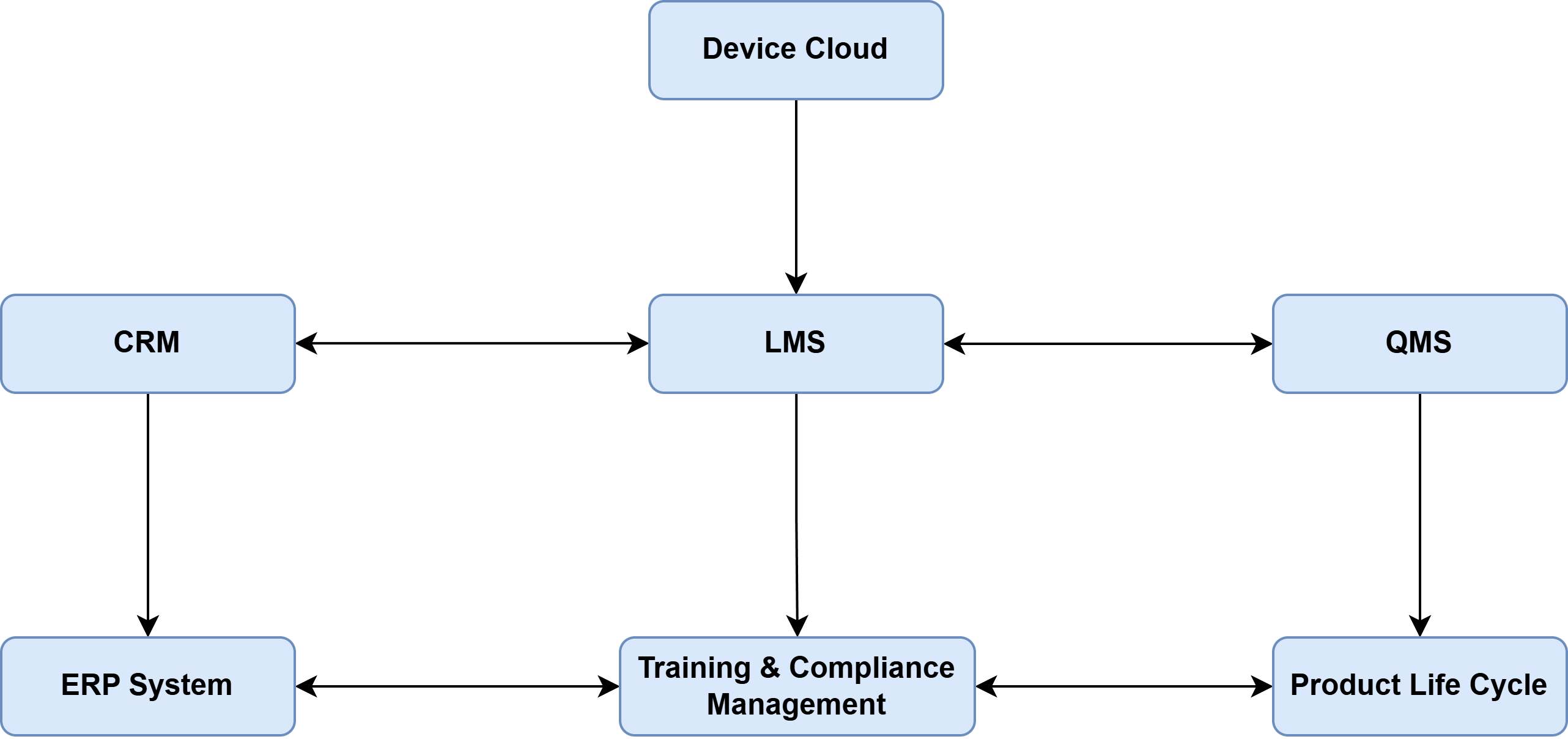
3. Why Static User Manuals and IFUs Are Failing?
Traditional user manuals and IFUs were designed for older medical devices, where today’s healthcare technologies involve software-driven systems, AI-assisted functionality, and continuously evolving operational interfaces.
3.1 Drawbacks of Paper-Based and PDF Documentation
Paper user manuals and static PDFs will not provide dynamic healthcare workflows and clinicians rarely have time searching lengthy documentation during busy clinical operations.
3.2 Frequent Software Updates Making IFUs Ineffective
Modern medical devices continuously evolve through:
- Firmware updates
- Software enhancements
- Cybersecurity patches
- Workflow modifications
Traditional Instructions for Use (IFUs) are often updated manually and distributed slowly across hospitals and distributors, where users may operate devices using outdated workflows or obsolete operational instructions.
3.3 Missing Interactive Support and Real-Time Troubleshooting
Traditional user guides are designed mainly for reading, not guided operational support during clinical workflows. They cannot provide:
- Interactive simulations
- Workflow walkthroughs
- Contextual recommendations
- Real-time troubleshooting assistance
When clinicians face operational uncertainty, static documentation rarely delivers fast and practical guidance. This increases workflow interruptions, usability confusion, and dependency on support teams.
3.4 Poor Documentation Accessibility and Learning Effectiveness
Traditional instructions for use (IFUs) also provide very limited engagement. Reading static text alone is significantly less effective than:
- Visual demonstrations
- Interactive learning
- Contextual workflows
- Simulation-based education
As device ecosystems become more complex, user engagement becomes increasingly important for competency retention.
3.5 Version Management of Multilingual Documentation Challenges
Global medical device organizations struggle managing multilingual documentation for product training, version control, localization accuracy, and compliance consistency across countries, distributors, and regulatory environments.
3.6 Challenges in Assessing User Knowledge and Operational Readiness
Traditional user manuals provide almost no visibility into whether users actually understand device workflows or operational procedures.
Organizations typically cannot measure:
- Who reviewed documentation
- Whether knowledge was retained
- Competency gaps
- Retraining requirements on their product knowledge training
4. User Manuals and IFUs (Instructions for Use)
Medical device documentation is evolving from static manuals supporting continuous learning through online manual, real-time guidance, multilingual accessibility, and operational consistency.
4.1 Transforming Static Manuals into Intelligent Digital Experiences
Traditional user manuals provide passive information, while modern digital ecosystems provide active operational support. Intelligent digital IFUs can combine:
- Workflow guidance
- Contextual assistance
- Multimedia learning
- Interactive operational support
Instead of forcing users to use lengthy PDF user guides, organizations can deliver structured knowledge experiences to reduce operational confusion during real clinical workflows.
4.2 Interactive and Multimedia-Based Learning Experiences
Healthcare professionals often learn more effectively through visual and interactive methods than through static documentation alone, where organizations create online manuals.
Modern learning ecosystems increasingly include:
- Instructional videos
- Workflow simulations
- Guided demonstrations
- Interactive assessments
- Scenario-based learning
4.3 AI-Powered Search and Context-Aware Assistance
AI-powered documentation systems are transforming how healthcare professionals access operational knowledge with product knowledge training.
Instead of manually searching lengthy manuals, users can ask contextual questions and receive:
- Workflow-specific guidance
- Troubleshooting recommendations
- Operational instructions
- Role-based assistance
4.4 Mobile-First and QR-Based Access to Device Documentation
Modern healthcare environments increasingly require instant mobile access to operational guidance.
QR-enabled documentation systems allow users to instantly access:
- Updated IFUs
- Troubleshooting workflows
- Instructional videos
- Compliance information
- Role-based learning modules
Mobile-first accessibility improves operational support across hospitals, remote healthcare facilities, field service teams, and distributor ecosystems while reducing dependency on printed user manuals.
4.5 Real-Time Documentation Updates and Compliance Synchronization
Traditional documentation methods struggle to keep pace with firmware updates and workflow modifications of software-driven medical devices.
Modern digital ecosystems from medical device manufacturers enable organizations to synchronize:
- Updated workflows
- Revised safety instructions
- Compliance changes
- Retraining requirements
Across global user networks in real time. This ensures users always access the latest approved operational guidance.
4.6 Personalized Learning Paths Based on User Roles
Different stakeholders require different levels of operational knowledge. A biomedical engineer, nurse, service technician, and distributor each interact with devices differently.
Modern digital learning ecosystems from medical device companies allow organizations to deliver role-based learning tailored to:
- Workflow responsibilities
- Device usage
- Certification requirements
- Operational complexity
Personalized learning improves relevance, competency retention, and overall operational effectiveness across healthcare environments.
5. Solution to The Challenges Through Continuous and Automated Training
A recent study reveals that leading medical device companies increasingly use LMS platforms, remote onboarding, and continuous digital learning to standardize operational training and compliance globally.
Continuous LMS for medical devices based learning helps improve operational competency, compliance readiness, usability consistency, and workforce training across hospitals, distributors, and global healthcare environments.
5.1 Moving from One-Time Training to Continuous Learning
Traditional onboarding assumes a single workshop or installation session maintains long-term competency. This approach no longer works for devices evolving through software updates, firmware upgrades, workflow changes, and compliance modifications.
Continuous learning helps healthcare organizations maintain workforce readiness, reduce operational confusion, and ensure users stay updated throughout the device lifecycle.
5.2 Automated Training Workflows and Smart Notifications
Modern LMS for medical device training courses automate onboarding, refresher training, firmware update education, certification reminders, and compliance notifications across hospitals and distributor networks.
For example, when a medical device receives a software update, the LMS can automatically assign revised learning modules and assessments to affected users, improving scalability and reducing manual training coordination efforts.
5.3 Role-Based and Competency-Based Training Automation
Different healthcare stakeholders require different operational knowledge depending on their responsibilities and workflows. Modern LMS for medical device training automatically deliver personalized learning paths for:
- Nurses
- Technicians
- Biomedical Engineers
- Service Teams
- Distributors
Role-based automation ensures users receive training relevant to their operational responsibilities, certification requirements, and device interaction levels, improving learning efficiency and competency management across organizations.
5.4 AI-Driven Learning Recommendations and Adaptive Education
AI-enabled learning ecosystems are transforming how healthcare organizations deliver competency development through product knowledge training.
Modern systems can analyze:
- Assessment performance
- Workflow behavior
- Operational errors
- Competency gaps
AI-driven education helps organizations proactively identify knowledge weaknesses before they contribute to operational issues or usability-related incidents.
5.5 Automated Certification, Retraining, and Compliance Tracking
Maintaining certifications manually across large healthcare environments is operationally difficult and time-consuming.
Modern LMS platforms for medical device training automate:
- Certification management
- Retraining schedules
- Competency validation
- Audit logs
- Compliance reporting
Organizations can track who completed training, when certifications expire, and which users require retraining. This significantly improves audit readiness while reducing administrative burden and compliance risk.
5.6 Continuous Competency Monitoring Through Analytics
Continuous learning ecosystems with FDA-compliant LMS for medical device teams provide organizations with real-time visibility into workforce readiness and operational competency.
Analytics dashboards help organizations monitor:
- Training completion rates
- Assessment performance
- Recurring workflow misunderstandings
- Regional competency gaps
This transforms training from a reactive process into a strategic operational function. Healthcare organizations can proactively improve learning effectiveness, reduce usability risks, and strengthen operational consistency across distributed healthcare environments.
6. Challenges in Measuring Workforce Knowledge and Operational Readiness
Global medical device manufacturers struggle maintaining consistent product training, documentation, and operational competency across countries, languages, distributors, and evolving regulatory environments.
6.1 Managing Multiple Regulatory Frameworks Across Regions
Medical device organizations must comply with multiple regulatory frameworks simultaneously, including:
- FDA requirements in the United States
- EU MDR regulations in Europe
- CDSCO compliance in India
- PMDA regulations in Japan
- NMPA standards in China
- TGA requirements in Australia
Each framework may involve different expectations and audit readiness. Managing these requirements manually across global operations creates significant administrative complexity.
6.2 Managing Translation Accuracy in User Manuals and IFUs
Medical terminology, workflow instructions, safety warnings, and compliance wording must remain accurate and operationally consistent across multiple languages and regions.
Organizations often struggle with:
- Translation accuracy
- Terminology consistency
- Localization delays
- Region-specific compliance wording
6.3 Global Training Standardization Across Teams and Distributors
Inconsistent onboarding can create uneven operational competency, workflow confusion, and increased support dependency across healthcare environments.
Centralized LMS for medical device training ecosystems help organizations standardize:
- Learning content
- Certifications
- Assessments
- Retraining workflows
- Documentation updates
While still supporting regional flexibility and multilingual delivery. This improves operational consistency and strengthens global compliance readiness.
7. Achieving Multilingual, Continuous Training with MedTech LMS
As medical devices become increasingly software-driven and globally distributed, modern MedTech LMS platforms are becoming essential infrastructure for managing global training standardization across hospitals, distributors, and healthcare teams.
7.1 The Rising Need for LMS Platforms in Healthcare Technology
Traditional training methods involving workshops, PDFs, and manual tracking are no longer sufficient for modern healthcare technology ecosystems.
Medical device organizations increasingly require platforms capable of managing:
- Continuous learning
- Multilingual education
- Certification tracking
- Retraining workflows
- Compliance visibility
LMS ecosystems help standardize training delivery across global operations while improving operational consistency and workforce readiness.
7.2 Core Requirements for a Healthcare and MedTech LMS
Modern MedTech LMS platforms must support far more than content delivery alone.
Key capabilities increasingly include:
- Multilingual learning management
- Competency-based education
- Certification automation
- Audit-ready reporting
- Version-controlled documentation
- AI-powered search
- Role-based learning pathways
These capabilities help organizations maintain operational alignment across complex healthcare environments.
7.3 Learning Automation for Manufacturers, Hospitals, and Service Teams
Automation significantly reduces the operational burden associated with large-scale healthcare training management using medical onboarding software.
Organizations can automate:
- Onboarding assignments
- Firmware update education
- Refresher training
- Certification renewals
- Compliance reminders
This ensures users receive the right operational guidance at the right time without relying on manual coordination across hospitals and distributor networks.
7.4 Continuous Learning Across Manufacturers and Service Teams
Global medical device manufacturers often support thousands of users across multiple regions, hospital groups, and partner ecosystems.
Centralized LMS for medical devices industry environments provide visibility into:
- Training completion
- Certification status
- Competency gaps
- Regional learning performance
This improves standardization while helping organizations maintain consistent operational education globally.
7.5 Managing Certifications, Assessments, and Compliance Records
Manual certification management becomes increasingly difficult as organizations scale globally.
Modern MedTech LMS platforms help automate:
- Assessments
- Certification workflows
- Retraining schedules
- Audit logs
- Compliance reporting
Organizations can track workforce readiness in real time while improving audit preparedness and reducing administrative overhead.
7.6 AI-Driven LMS Features for Modern MedTech Devices
AI is increasingly transforming enterprise learning environments within healthcare technology ecosystems.
AI-enabled MedTech LMS platforms can provide:
- Adaptive learning recommendations
- Personalized education pathways
- Contextual operational assistance
- Predictive retraining alerts
These systems help organizations proactively identify competency gaps before they contribute to workflow errors or operational incidents.
7.7 Lifecycle-Based Training Management for Medical Devices
Medical device training courses are increasingly becoming part of the broader medical device lifecycle rather than a standalone onboarding activity.
When devices receive:
- Software updates
- Workflow modifications
- Compliance changes
- Safety advisories
The LMS can automatically trigger updated training workflows and retraining requirements. This creates a continuous operational learning ecosystem aligned with evolving healthcare technologies.
8. Easy Integration with Existing Healthcare Systems
Modern medical device training courses must integrate seamlessly with QMS, ERP, CRM, PLM, and connected medical device platforms across healthcare operations.
Integrated environments improve operational visibility, compliance synchronization, workforce management, and real-time decision-making across global medical device organizations.
Integrated Enterprise Ecosystem
The integrated enterprise ecosystem connects LMS platforms with QMS, ERP, CRM, PLM, and device cloud systems to automate training, synchronize compliance, manage digital IFUs, and support continuous operational learning.
8.1 Cross-Platform LMS Integration with QMS, CRM, ERP, and PLM Systems
Medical device organizations manage large volumes of operational, compliance, product, and customer data across multiple enterprise systems.
Integrating MedTech LMS platforms with:
- QMS systems
- ERP platforms
- CRM environments
- PLM solutions
Helps synchronize training workflows with quality events, product updates, customer onboarding, and compliance processes. This reduces data silos while improving operational coordination across departments.
8.2 Consolidated Reporting for Training, Compliance, and Device Analytics
Disconnected reporting systems make it difficult for organizations to monitor workforce readiness and operational performance globally during product knowledge training.
Unified dashboards provide centralized visibility into:
- Training completion
- Certification status
- Compliance readiness
- Device adoption
- Usage analytics
This enables leadership teams to identify operational gaps quickly while improving enterprise-level decision-making and compliance management.
8.3 Executive Reporting and Real-Time Analytics
Modern learning ecosystems of medical device training courses generate large amounts of operational and competency-related data.
Advanced analytics platforms help organizations monitor:
- Workforce performance
- Retraining trends
- Regional competency gaps
- Recurring operational issues
Executive reporting environments provide real-time insights that support strategic planning, compliance audits, customer success management, and operational optimization across global healthcare ecosystems.
8.4 Medical Device Integration Through APIs
Connected medical devices are transforming how operational learning and device usage interact to form a splendid training ecosystem.
API-driven integrations allow MedTech LMS platforms to communicate directly with:
- Device cloud platforms
- Operational systems
- Remote monitoring environments
- Connected healthcare infrastructure
In the future, devices may automatically trigger retraining workflows, operational alerts, or contextual learning recommendations based on real-time usage patterns and workflow behavior.
8.5 Cloud-Based Global Training and Knowledge Management
Cloud-based learning ecosystems allow medical device organizations to scale product training operations globally without relying on fragmented local infrastructure.
Cloud platforms improve:
- Global accessibility
- Multilingual content delivery
- Remote workforce support
- Centralized updates
- Enterprise scalability
This enables manufacturers, hospitals, distributors, and service teams to access synchronized operational knowledge consistently across geographically distributed healthcare environments.
9. Industry Applications of LMS Platform in Healthcare Technology
Healthcare organizations need scalable medical product training platforms that ensure operational consistency, compliance readiness, and continuous competency across distributed teams.
9.1 MRI and CT Imaging Systems Training
MRI and CT imaging systems involve highly specialized workflows, advanced software configurations, and continuously evolving imaging capabilities.
Modern MedTech LMS ecosystems help radiology teams access:
- Workflow simulations
- Protocol guidance
- Troubleshooting assistance
- Continuous update training
This improves device utilization, reduces operational errors, and supports standardized imaging practices across healthcare environments.
9.2 Infusion Pump and Ventilator Training Automation
Infusion pumps and ventilators require precise operational product training due to their direct impact on patient care. Small workflow misunderstandings can create serious clinical risks.
Automated learning systems help organizations manage:
- Onboarding
- Competency assessments
- Firmware update training
- Retraining workflows
This ensures clinicians continuously receive updated operational guidance and safety education.
9.3 Surgical Robotics and VR-Based Learning
Robotic surgery systems involve highly complex procedural workflows that are difficult to master through static user manuals alone.
Healthcare organizations increasingly use:
- VR simulations
- Immersive workflow training
- Interactive demonstrations
- Guided procedural learning
Simulation-based learning also allows clinicians to practice safely before real-world device usage.
9.4 Laboratory Diagnostic Equipment Training
Modern laboratory systems involve automation workflows, software-driven diagnostics, calibration procedures, and connected data environments.
Digital learning ecosystems help laboratory teams manage:
- Equipment onboarding
- Workflow standardization
- Quality control procedures
- Compliance training
Continuous education ensures laboratories maintain operational consistency while adapting to evolving technologies and regulatory expectations.
9.5 Remote Troubleshooting for Biomedical Engineers
Biomedical engineers often support multiple devices across distributed healthcare facilities to ease product knowledge training. Accessing updated troubleshooting information quickly is critical for minimizing downtime.
Modern learning ecosystems provide:
- Mobile-first operational guidance
- QR-based troubleshooting access
- AI-powered search
- Remote support resources
This improves service responsiveness while reducing dependency on printed manuals and disconnected documentation systems.
9.6 Distributor and Partner Enablement Programs
Global medical device manufacturers frequently rely on regional distributors and implementation partners to support hospitals and healthcare providers.
Centralized LMS for medical devices help standardize:
- Distributor onboarding
- Product education
- Certification management
- Operational training quality
This improves customer experience while ensuring consistent product knowledge delivery across regions.
9.7 Hospital-Wide Continuous Training Programs
Large hospital groups often operate hundreds of medical devices across multiple departments, shifts, and clinical teams.
Continuous learning ecosystems allow hospitals to manage:
- Competency tracking
- Recurring education
- Certification renewals
- Department-specific training
Through medical device training software, this improves workforce readiness, operational consistency, and compliance management across enterprise healthcare environments.
As healthcare technology continues to evolve, Learning Management Systems (LMS) are becoming a strategic component of medical device training.
10. Compliance Management and Audit Readiness
Medical device organizations use LMS for medical devices to centralize training, improve compliance visibility, ensure workforce competency, and streamline audit readiness across global healthcare operations.
10.1 FDA, ISO, and Regulatory Training Compliance
Medical device organizations must comply with multiple global regulatory frameworks globally. These regulations increasingly emphasize:
- Workforce competency
- Operational consistency
- Device usability
- Documentation traceability
- Continuous training management
| Regulatory Framework | Region | Key Requirements | Training Focus Areas | LMS Enablement (How LMS Helps) | Compliance Outcome |
|---|---|---|---|---|---|
| FDA (Food and Drug Administration) | United States | Product safety, usability, traceability, training records | Device operation, safety procedures, adverse event handling, IFU adherence | Centralized training records, audit trails, role-based training, certification tracking | Faster FDA audit readiness, reduced compliance risk |
| EU MDR (Medical Device Regulation) | Europe | Clinical safety, post-market surveillance, usability engineering, documentation control | Device usage, risk management, updated IFU training, vigilance reporting | Version-controlled learning content, automated retraining on updates, multilingual training | Improved compliance consistency across EU markets |
| ISO 13485 | Global | Quality management system, competency management, process control | Quality processes, SOP training, validation procedures | Competency-based learning paths, certification automation, training logs | Strong QMS alignment and audit traceability |
| CDSCO | India | Safety compliance, import regulations, device registration requirements | Device handling, safety guidelines, regulatory reporting | Centralized training records, localized content delivery, compliance dashboards | Improved regional compliance and audit readiness |
| PMDA | Japan | Safety standards, documentation accuracy, clinical effectiveness | Device operation training, safety procedures, documentation adherence | Localized training modules, audit-ready reporting, structured certification workflows | Better regulatory alignment in Japan |
| NMPA | China | Strict device approval, clinical safety, post-market monitoring | Device usage, compliance workflows, safety documentation | Multilingual LMS support, structured learning validation, traceable records | Reduced compliance gaps in China market |
| TGA | Australia | Safety, performance, post-market surveillance, documentation control | Device safety training, reporting procedures, operational workflows | Automated compliance tracking, training logs, certification monitoring | Improved audit efficiency and regulatory compliance |
Modern LMS platforms help organizations align training activities with regulatory requirements by centralizing compliance workflows, maintaining digital records, and automating retraining schedules.
This improves audit readiness while reducing compliance gaps across geographically distributed healthcare operations.
10.2 Electronic Signatures and Digital Audit Trails
Digital audit trails and electronic signatures are becoming essential components of modern healthcare compliance environments.
Organizations must maintain clear evidence showing:
- Who completed training
- When training was completed
- Which documentation version was accessed
- Whether assessments were successfully completed
Modern MedTech Compliance Solution provide automated audit trails that continuously capture learner activity, assessment results, certification status, documentation access history, and retraining workflows.
Electronic signatures can validate completion of critical compliance activities while supporting regulatory requirements for digital traceability.
10.3 Documentation Traceability and Version Control Management
Medical device documentation changes frequently due to software updates, firmware enhancements, workflow modifications, regulatory changes, and safety advisories.
Managing documentation manually across hospitals, distributors, and service teams creates significant operational complexity.
MedTech LMS platforms can automatically synchronize updated instructions, policies, IFUs, and training content across global environments.
Version traceability helps organizations identify:
- Which users accessed specific documentation versions
- When updates were released
- Whether retraining was completed successfully
This reduces operational risk while strengthening global compliance governance.
10.4 Automated Compliance Logs and Reporting Systems
Compliance reporting becomes increasingly difficult as organizations expand globally across multiple healthcare environments, distributors, and regulatory jurisdictions.
Traditional reporting methods often rely on spreadsheets, disconnected systems, and manual documentation collection processes.
Modern LMS ecosystems for medical device training courses automate:
- Compliance reporting
- Certification tracking
- Retraining schedules
- Audit logs
- Workforce readiness monitoring
Real-time dashboards provide visibility into:
- Training completion rates
- Competency gaps
- Overdue certifications
- Compliance status across regions
Automated reporting reduces administrative workload while enabling leadership teams to prepare quickly for regulatory inspections, internal audits, and quality reviews.
10.5 Cybersecurity, Privacy, and Data Protection Requirements
Healthcare organizations manage highly sensitive operational, training, and workforce-related information.
As medical devices become increasingly connected and software-driven, cybersecurity and data protection requirements are becoming more critical across digital learning ecosystems.
Modern LMS for medical device training platforms must support:
- Secure user authentication
- Encrypted data management
- Role-based access controls
- Audit traceability
- Compliance with privacy regulations
Organizations must also ensure that learning systems integrate securely with enterprise environments including:
- QMS systems
- ERP platforms
- CRM environments
- PLM systems
- Connected healthcare infrastructure
Strong cybersecurity governance helps protect operational continuity while reducing compliance and reputational risks.
LMS Vendors 2026 - How to Choose the Top LMS Providers List
To succeed in the business world, many institutions are seeking the right LMS Vendors who can streamline training and education.
ekhool.com
11. Business Value and Operational Benefits
Digital learning ecosystems provide significant operational, financial, and strategic benefits for medical device organizations.
Traditional training environments often create:
- high operational costs,
- inconsistent onboarding,
- delayed audit preparation,
- fragmented workforce readiness,
- and increased dependency on support teams.
Modern LMS for medical devices industry help organizations automate training workflows, standardize learning delivery, improve compliance management, and strengthen operational consistency across global healthcare environments.
Organizations implementing digital training ecosystems frequently achieve measurable improvements in workforce productivity, customer satisfaction, compliance readiness, and operational scalability.
| Area | Traditional Approach | Modern LMS Approach |
|---|---|---|
| Training Cost | High | Reduced |
| Audit Preparation | Weeks | Hours |
| Support Tickets | High | Lower |
11.1 Reducing Training Costs and Administrative Complexity
Traditional training programs often involve instructor-led workshops, travel expenses, printed manuals and manual administrative coordination as organizations scale globally, these costs increase significantly.
MedTechLMS platforms reduce operational expenses by enabling:
- digital learning delivery,
- centralized content management,
- automated retraining workflows,
- and remote workforce education.
Organizations can standardize learning while minimizing repetitive manual processes and reducing dependency on physical training infrastructure.
11.2 Accelerating Product Adoption and User Readiness
Healthcare professionals increasingly work with complex medical technologies involving advanced software interfaces, AI-assisted workflows, and connected operational environments.
Digital learning ecosystems help users adopt new products faster with medical equipment training LMS through:
- guided onboarding,
- interactive learning pathways,
- role-based education,
- simulation-driven learning,
- and contextual operational support.
Faster learning improves user confidence, operational consistency, and workforce readiness during product rollouts.
11.3 Enhancing Customer Confidence and Product Experience
Customer satisfaction increasingly depends not only on product performance but also on the quality of operational education and user support.
Organizations that provide:
- continuous learning,
- accessible training resources,
- multilingual education,
- and real-time guidance
can significantly improve customer experience and long-term product trust.
Well-trained users are more likely to operate devices confidently while reducing operational uncertainty and support dependency.
11.4 Reducing Support Dependency and Service Costs
Traditional documentation methods on user guides often create confusion during operational workflows, resulting in increased support requests and field service dependency.
Modern LMS for end user training platforms provide:
- self-service learning,
- contextual troubleshooting,
- searchable knowledge environments,
- and continuous retraining support.
This helps users resolve operational issues independently while reducing pressure on technical support teams and lowering field service costs.
11.5 Strengthening Compliance Readiness and Reducing Risk
Manual compliance management creates risks related to incomplete documentation, inconsistent training and delayed audit preparation.
User manual software help organizations maintain continuous compliance visibility through:
- automated reporting,
- centralized audit trails,
- certification monitoring,
- and real-time workforce tracking.
This reduces regulatory exposure while improving enterprise-wide compliance governance.
11.6 Improving Device Utilization and Clinical Productivity
Operational inefficiencies often occur when healthcare professionals lack confidence in device workflows or advanced features.
Continuous digital education helps improve:
- device utilization,
- workflow efficiency,
- operational accuracy,
- and clinical productivity.
Interactive learning environments enable users to understand advanced functionality more effectively while supporting better healthcare outcomes.
12. Roadmap: How to Manage User Manuals into Online Medical Device Training (eIFU + LMS Approach)
Transforming a traditional user manual into an online training system for medical devices requires converting static IFUs into structured, interactive, and LMS-driven digital learning experiences aligned with clinical workflows, compliance, and usability needs.
| Phase | Duration | Objective |
|---|---|---|
| Evaluation and Gap Analysis | 1–2 Weeks | Assess existing IFUs, PDF manuals, SOPs, and training materials to identify usability, compliance, knowledge transfer, and workflow gaps. |
| Device Prioritization and Planning | 1–2 Weeks | Identify high-priority devices based on complexity, patient safety impact, regulatory requirements, frequency of use, and operational risk. |
| Digital Content Transformation | 2–3 Weeks | Convert static manuals into structured eIFU learning modules, microlearning content, videos, simulations, assessments, and role-based learning paths. |
| LMS Platform Selection and Configuration | 1–2 Weeks | Deploy a MedTech LMS capable of managing eIFU content, multilingual delivery, version control, compliance reporting, certification management, and mobile access. |
| Pilot Deployment and User Validation | 2–3 Weeks | Launch pilot eIFU training programs with clinicians, biomedical engineers, service teams, and distributors to validate effectiveness and usability. |
| Global Rollout and Standardization | 2–4 Weeks | Scale eIFU training across hospitals, healthcare networks, distributors, and international markets while ensuring standardized knowledge delivery and compliance. |
| Continuous Optimization and AI Enhancement | Ongoing | Utilize LMS analytics, learner behavior insights, AI recommendations, and compliance monitoring to continuously improve training effectiveness and content relevance. |
12.1 Evaluating Existing User Manuals and Training Gaps
Analyze current IFUs, PDF manuals, to identify gaps in clarity, usability, compliance alignment, and real-world clinical applicability across medical device operations.
12.2 Identifying Devices Requiring eIFU Transformation Priority
Classify medical devices based on complexity, patient risk, frequency of use, and error sensitivity to be converted into digital eIFU product training modules.
12.3 Converting Manuals into Structured Digital Learning Content
Break down static manuals into modular learning units aligned with LMS-based medical device training delivery.
12.4 Selecting MedTech LMS and eIFU Digital Training Platform
Choose an MedTech LMS capable of hosting eIFU content with features like version control, multilingual support, mobile access, QR-based retrieval, compliance tracking, and role-based training delivery.
12.5 Pilot Transformation and Clinical User Validation
Deploy transformed digital manuals as pilot eIFU training courses for selected users, collect feedback from clinicians and engineers, and validate usability, comprehension, and workflow alignment.
12.6 Scaling to Global eIFU Deployment and Standardization
Roll out digital IFU training across hospitals, distributors, and regions ensuring standardized medical device usage, consistent compliance training, multilingual access, and unified operational understanding.
12.7 Continuous Optimization Using AI and Training Analytics
Use LMS for medical devices analytics and AI insights to continuously improve digital manuals by tracking learning behavior, identifying knowledge gaps, updating workflows, and ensuring real-time compliance alignment.
Roadmap Outcomes
| Stage | Expected Outcome |
|---|---|
| Evaluation | Clear understanding of documentation weaknesses and training requirements. |
| Prioritization | Faster transformation of high-risk and high-impact medical device training programs. |
| Content Transformation | Interactive, engaging, and measurable learning experiences replacing static manuals. |
| LMS Deployment | Centralized management of eIFUs, certifications, competency tracking, and compliance records. |
| Pilot Validation | Verified user adoption, improved comprehension, and workflow alignment. |
| Global Standardization | Consistent product knowledge delivery across regions, hospitals, and partner ecosystems. |
| Continuous Optimization | Data-driven improvements using analytics, AI insights, and ongoing compliance updates. |
By following this phased approach, medical device manufacturers can evolve from simply providing electronic Instructions for Use (eIFUs) to delivering a comprehensive digital learning ecosystem that supports continuous education, competency management, compliance tracking, and improved clinical outcomes throughout the device lifecycle.
13. Future Trends in Medical Device Training and Digital IFUs
Making the traditional product training to the end user, now has come to an end with the product training LMS to get the training online.
13.1 Intelligent and Self-Updating Digital Documentation
Enable intelligent self-updating digital IFUs that automatically sync with device software updates, ensuring clinicians always access accurate, real-time operational instructions and compliance-ready documentation across healthcare systems.
13.2 AI-Driven Personalized Learning Ecosystems
Use AI to personalize medical device training journeys based on user roles, performance, and competency gaps, improving learning efficiency, retention, and operational readiness across healthcare environments.
13.3 Embedded Real-Time Guidance Within Medical Devices
Provide embedded real-time guidance within medical devices through integrated MedTech LMS support, enabling clinicians to access contextual instructions, troubleshooting help, and workflow assistance during clinical operations.
13.4 Automated Compliance Monitoring and Risk Management
Automate compliance monitoring and risk management by tracking training completion, certification status, and device usage behavior to ensure regulatory readiness and reduce operational safety risks.
13.5 The Evolution Toward Smart Connected Learning Platforms
Medical device training is evolving into smart connected ecosystems integrating LMS, devices, and cloud systems, enabling continuous learning, automation, and real-time operational intelligence across healthcare networks.
14. e-KHOOL: Driving Training Transformation in the Medical Device Industry
e-KHOOL LMS for Medical Devices enables manufacturers, hospitals, and distributors to deliver structured, continuous, and compliance-driven training across global healthcare ecosystems.
14.1 Structured and Compliance-Driven Medical Device Training
In the MedTech LMS industry, training is not just onboarding—it is directly linked to patient safety, regulatory compliance, and operational accuracy.
e-KHOOL enables organizations to manage:
- Mandatory compliance training aligned with FDA, EU MDR, ISO 13485 requirements
- Role-based learning for clinicians, biomedical engineers, and service teams
- Automated certification tracking, refresher training, and audit readiness
This ensures consistent device usage, reduced operational errors, and improved regulatory compliance across healthcare environments.
14.2 Scalable and Standardized Global Training Delivery
Medical device manufacturers operate across hospitals, distributors, and countries with varying clinical environments.
e-KHOOL LMS for user manual training supports:
- Large-scale training across global healthcare networks
- Standardized onboarding across hospitals and distributors
- QR-based and mobile-first learning for clinical accessibility
- Continuous training updates for software and firmware changes
This helps ensure consistent device understanding regardless of geography, language, or workforce shifts.
14.3 Outcome-Driven Learning and Clinical Performance Insights
e-KHOOL LMS for User manual courses improves training effectiveness through measurable learning outcomes and competency tracking.
It enables:
- Skill-based assessments and certification validation
- Real-time visibility into training completion and competency gaps
- Continuous upskilling for AI-enabled and software-driven devices
- Data-driven insights into workforce readiness and device usage behavior
This leads to safer device operation, improved clinical efficiency, and reduced support dependency.
14.4 Key Outcomes & Real-World Impact Metrics
Medical device organizations using LMS-driven training systems like e-KHOOL achieve measurable improvements in operational safety, compliance, and workforce readiness.
| Metric | Before Digital LMS | With e-KHOOL LMS | Impact |
|---|---|---|---|
| Training Completion Rate | 50% – 70% | 85% – 98% | Higher workforce coverage |
| Device Usage Errors | Higher risk | Reduced by 30%–50% | Improved patient safety |
| Onboarding Time | 4–8 weeks | 2–4 weeks | Faster clinical readiness |
| Compliance Readiness | Manual tracking | Automated audit-ready logs | Reduced audit risk |
| Certification Management | Fragmented | Centralized & automated | Zero missed renewals |
| Training Consistency | Variable | Standardized globally | Uniform device usage |
| Support Tickets | High dependency | Reduced by 25%–45% | Lower service load |
| Knowledge Retention | Low (static IFUs) | High (interactive learning) | Better clinical confidence |
| Update Training (Firmware/Software) | Delayed | Real-time automated assignments | Reduced operational gaps |
Conclusion
The medical device industry is rapidly moving away from static manuals and one-time onboarding toward continuous, automated, and competency-based digital learning ecosystems.
e-KHOOL LMS helps medical device user training into continuous digital learning, improving compliance, reducing errors, and ensuring global competency across healthcare ecosystems.
e-KHOOL enables manufacturers and hospitals to deliver scalable, role-based training with real-time updates, audit readiness, and consistent device understanding worldwide.
FAQs on LMS-Based eIFU Training for Medical Devices
Transform Medical Device Training into Continuous Digital Learning
Contact Support